
Treating ELVs according to new regulation on vehicle circularity
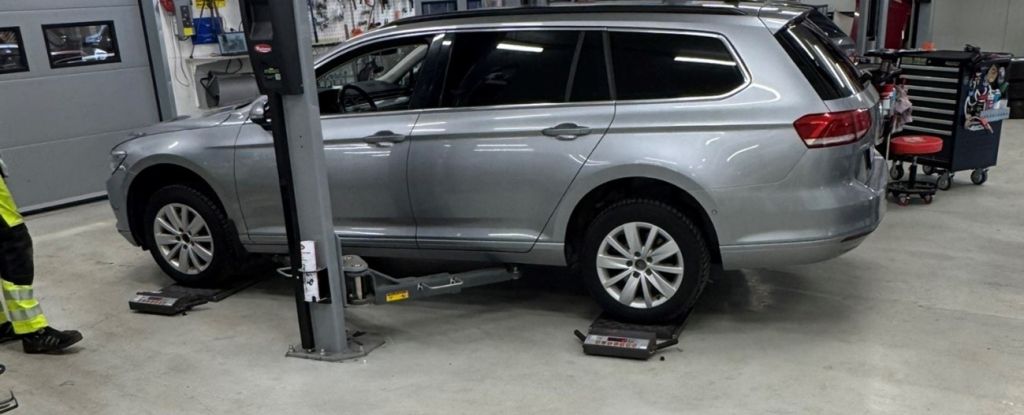
The European Parliament and the Council have stressed the need to reform the reusability, recyclability and recovery of vehicles. The latest proposal for the regulation on circularity requirements for vehicle design and on management of end-of-life vehicles was published on 26 February 2026 and aims to repeal Directive 2000/53/EC of the European Parliament and of the Council on end-of-life vehicles. The new circularity regulation for end-of-life vehicles will affect the entire life cycle of vehicles by setting out the necessary measures from vehicle manufacturing to the final disposal of end-of-life vehicles.
Demonstration of evolving legislation requirements
A study by Turku University of Applied Sciences examined the dismantling of an end-of-life vehicle in accordance with the new regulation on managing ELVs at Autocirc Nurmijärvi, Finland. The dismantling demonstration aimed to treat the end-of-life vehicle with the requirements of the new regulation. The test focused in particular on Annex 7 Part C of the regulation, which specifies the mandatory parts and components that must be removed from an end-of-life vehicle before shredding.
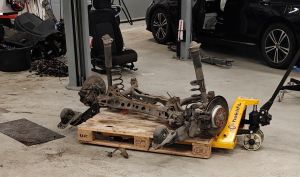
Annex 7 of the regulation concerns the treatment of end-of-life vehicles. The annex is divided into sections A-G, which outline minimum requirements for the storage and cleaning of end-of-life vehicles, as well as for the removal of parts and components and their reuse, remanufacturing and refurbishment in compliance with circularity.
Part C of Annex 7 lists all the parts and components that must be removed from end-of-life vehicles in the future. The removal of the listed parts and components is not mandatory if it is demonstrated that post-shredding treatment separates the materials just as effectively as manual or semi-automated dismantling processes. The list comprises 19 parts and components, including vehicle batteries, catalytic converters, and at least 70% of glass materials.
Results of the manual vehicle dismantling demonstration
A vehicle dismantling demonstration was conducted at the Autocirc Nurmijärvi facility on April 14–15, 2026, where a vehicle was treated by two workers. The steps to dismantling were planned in advance, and the dismantling process was timed and documented.
Processing the vehicle in accordance with the regulation—including pre-treatment, the removal of mandatory parts and components, material sorting, and the documentation of key parts—took a total of 7 hours and 36 minutes. This total time encompasses the dismantling work performed by the two workers as well as supplementary post-dismantling tasks, such as washing, photographing, and documenting parts for sale or further processing.
The actual dismantling of the vehicle, including the frame, took approximately 6 hours and 34 minutes; subsequent tasks (further dismantling of the dashboard and powertrain unit, along with documentation) brought the total time to the aforementioned figure. The results indicate that dismantling in accordance with Part C of Annex 7 of the regulation is significantly more time-consuming than current dismantling practices based on minimum requirements.
New opportunities for material and component recovery
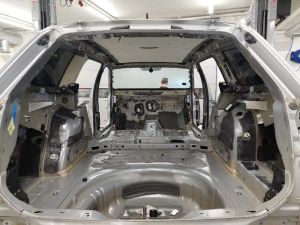
In the dismantling demonstration, a significant amount of material and components was removed from the vehicle before shredding. The vehicle’s initial weight was 1,495 kg, and the weight of the frame sent for shredding was 380 kg, meaning a total of 1,115 kg of material and parts was removed. This demonstrates that dismantling in accordance with the regulation directs a significantly larger portion of the vehicle’s mass to separate downstream processing than the minimum dismantling currently required by law.
The results regarding critical raw materials and valuable materials were particularly significant. For instance, 13 kg of copper cabling was recovered from the vehicle, primarily during the removal of the main wiring harnesses. In addition, several components were diverted for reuse, supporting the regulation’s key objective of improving the quality of material circulation.
Development of the dismantling process in the future
The regulation on circularity requirements for vehicle design and on management of end-of-life vehicles and the new requirements it introduces will impact the entire automotive ecosystem, from manufacturing to scrapping. The European Union emphasizes the need to steer the automotive industry toward greater self-sufficiency and circular economy practices. New legislation will influence vehicle design and manufacturing, facilitating the dismantling process as the number of new cars on the market grows.
Results from the dismantling demonstration indicate that processing an end-of-life vehicle in compliance with the new regulation is technically feasible within existing dismantling facilities; however, it requires significantly more time, planning, and documentation than current practices. Dismantling in accordance with the regulation enables substantially better recovery of materials and components, yet it also increases the workload involved and highlights the pivotal role of process development, assembly-line-style workflows, and digitalization in enhancing operational efficiency.
The whole report of the demonstration is available here: Vehicle Dismantling Test
Turku University of Applied Sciences project “Renewing Car Recycling in the Sustainability Transition – A Low-Carbon, Circular-Economy Car Dismantling Line and Ecosystem” (Car Dismantling Line 2.0) aims to develop new circular economy solutions and working methods for the vehicle dismantling stage . such as the intact removal and reuse of components, source-based material sorting, and more efficient recycling of automotive materials—in collaboration with project stakeholders and companies.